Elli Benaiah
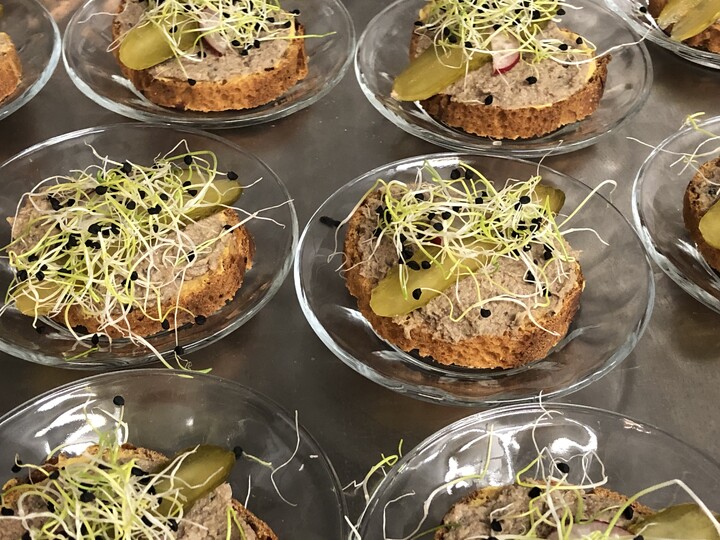
For thirty years, I stood in a courtroom—first in Canada, then in Israel—advocating for others. I argued murder cases before juries in Toronto and defended organized crime cases in Tel Aviv. Life was good. But one day, I no longer recognized the voice speaking through me. So I left the courtroom and found my own voice in the kitchen.
I wanted to return to something older—to scent and story. I am a born storyteller and a fineschmecker foodie. I had always been a hobby cook, serving up dishes to guests hungry for food and tales.
And then I hung up my barrister’s gown, trained as a chef, and after a professional stint in Switzerland and Germany, have now returned to turmeric-stained cutting boards and handwritten recipes from a world that’s nearly gone. I’m writing a cookbook about the Jewish kitchens of Southeast Asia. The food I love most, the food I learned to love through my Baghadadi Indian granny Ruby.
I am a world of contradictions. But I’ve learned to find harmony in contradiction. I deal well with it.
My mother comes from a German Ashkenazi rabbinic family—seven centuries documented. My father was from a Baghdadi Jewish family in India. Growing up, our table was a tapestry of cultures: from my mother’s Kartoffelsalat and Apfelstrudel to my father’s fragrant basmati pilaf and chitanee curry. This fusion of flavors became the foundation of my culinary identity.
So I was born into division. My parents’ marriage was a Big Bang—religious, cultural, emotional. And I was raised in its aftershock. Cooking provided the peace I had been seeking since childhood. It became my therapy, my sanctuary, a place where disparate ingredients came together harmoniously.
In 2019, when the opportunity arose, I opened a kosher restaurant in the heart of the Jewish community in Basel, Switzerland. Though not strictly observant today, my solid religious background—including years in a charedi yeshiva in Toronto—made me perfectly suited to serve as the community’s kosher caterer.
Basel sits at a crossroads between Switzerland, Germany, and France. Low-cost flights have turned this charming but sleepy city into a hub. I became the go-to kosher caterer for anyone with a need—or curiosity—for Jewish food.
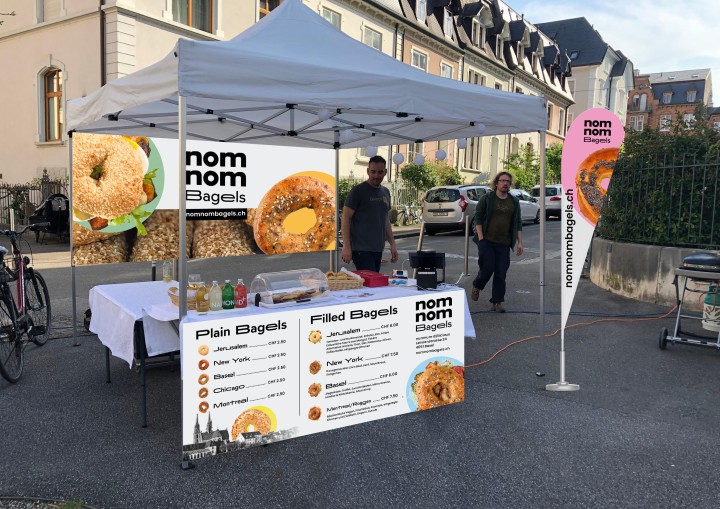
Three months after opening, COVID hit. The restaurant closed, and I pivoted to takeaway. I set up a tent outside the synagogue and sold food to anyone passing by. Numnum, my restaurant, became a neighborhood hit.
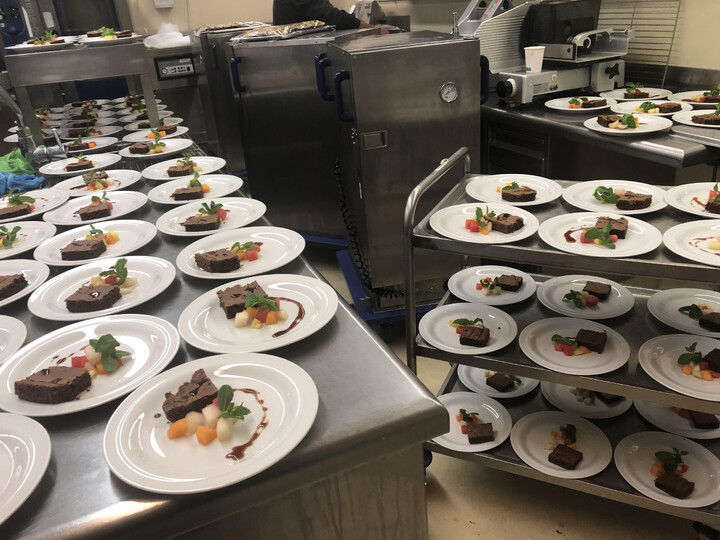
During Passover that year, I prepared 400 takeaway Seder meals—each one packed with tradition, memory, and matzo. Volunteers helped deliver them to elderly community members unable to leave their homes. The local station, Telebasel, came to film the kitchen in action. What they captured wasn’t just food prep—it was a community rallying to preserve ritual in a time of rupture. We kept the Seder alive, even when the world felt like it was closing in.
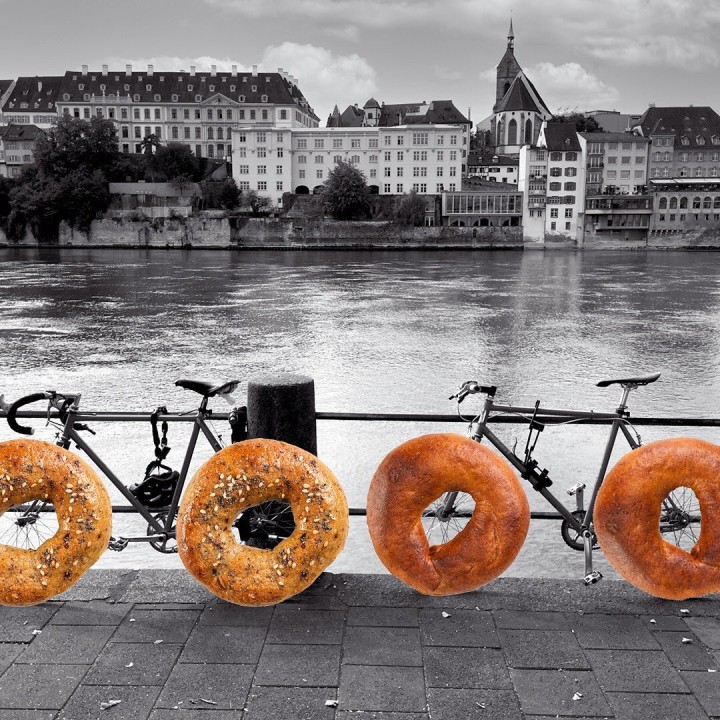
I catered to alpine skiers and cooked for the Hôtel Les Trois Rois, where Herzl’s famous balcony overlooks the Rhein. I cooked for tourists, for businessmen, for passersby curious about “Jewish food.” I baked bagels and sold them at the Jewish museum. The work was relentless—but I found my peace. I perfected the timing of a well-simmered stew. I made food my argument. I was filmed, interviewed, taught food courses. The shift from cases to ladles was complete.
In 2023, the restaurant closed—the local Jewish community had grown too small to sustain it. I was then invited to run another kosher restaurant, this time in Munich. So I moved again.
Then I fell ill. I became disabled. I could no longer work in a commercial kitchen.
So I decided to combine my skills—the writing and the cooking—and began to write about food. Jewish food.
I’m not religious in the traditional sense. But I connect to my Jewish identity through feeling, doing, creating. Through memory and food. Through tension and beauty. Through being just Jewish enough—in places where that isn’t always simple.
There was also movement. Geographic, but not only.
From England, where I was born.
To Israel, where I was part of a Jewish majority.
To Toronto, where I belonged to a confident, influential minority—mostly Ashkenazi, often unaware of the world my father carried.
Then to Switzerland, where the Jewish community was smaller, quieter, more reserved.
And now to Germany. Munich—a city filled with ghosts.
The Jewish community here is largely post-Soviet. I live with a German Catholic partner, whom I met on one of my many EasyJet flights to and from Tel Aviv.
Munich is a strange place to be Jewish. Not religiously—but in a sense of presence. Of persistence. Of resilience and catharsis through creation.
Then came October 7. And in the wave of anti-Israel fallout, I became—simply—a Jew.In Germany.
On one hand, I have to be careful—for safety, for self-preservation. I’ve gone from a proude Tel Avivian to feeling that speaking Hebrew in public is a provocation. To making sure when I read the Israel news that no one is looking over my shoulder into my mobile screen. I feel it most acutely in Germany, where my family’s history is everywhere and nowhere. I live in a place that protects Jews—but in a Europe that doesn’t want to hear us and doesn’t want to feel guilty anymore.
On the other, I feel more alive than ever.
These days, I write. I research Jewish recipes from Asia and the Middle East—Baghdad, Bengal, Burma, Singapore.
The Jews who once lived along the trade routes of British Southeast Asia have mostly dispersed. After World War II, as the British Empire collapsed, nationalism and religious extremism replaced tolerance. Jews fled: to England (as my father’s family did), to Australia, the United States, and Israel.
I decided to document that lost world—through its kitchen. This is my form of resistance.
I compiled a spreadsheet of 700 recipes, from India to Shanghai. Some are 200 years old. Some come from family memory. Some from fellow food obsessives I’ve pestered for their secrets. I’ve bought every cookbook I could find on this cuisine. I’ve traveled to trace its roots—most recently to Singapore.
To this research, I bring a trained legal mind, a trained cook’s hand, and my family’s memory.
I trace how flavors migrate. How traditions bend. How spices survive—even when communities don’t.
It’s more than culinary curiosity. It’s testimony:
We were here.
We mattered.
We cooked.
I speak many languages—of exile and return, of saffron and garam masala, of law and longing, of East and West. I don’t speak in one voice because I’ve never belonged to just one. That, I’ve come to believe, is a strength.
I don’t carry angst. I carry flavour. I call it nostalgic flavormaxing.
To be Jewish now, for me, is not to stand still.
Today, through my writing, I plead for myself—and for my people.
Food writing is how I move now—with memory and longing.
It’s how I carry stories that don’t fit neatly into one language or tradition.
And I do so—not with anger, but with taste. With conviction and passion.
With a pen in one hand and a ladle in the other.
We were here.
We mattered.
We cooked.
Copyright Elli Benaiah, June 2025. All rights reserved; this intellectual property belongs solely to Elli Benaiah.
About Elli Benaiah
Elli Benaiah is a former lawyer turned chef and food writer whose work traces the Jewish culinary diaspora across Southeast Asia. His writing blends personal history with culinary memory, drawing on heritage, exile, and spice.
Through my Beyond Babylon project, I trace the Jewish diaspora through South and Southeast Asia, exploring how recipes preserve memory and migration in every bite.
 Stories Connecting Us
Leave a Comment