Annie Mullarvey
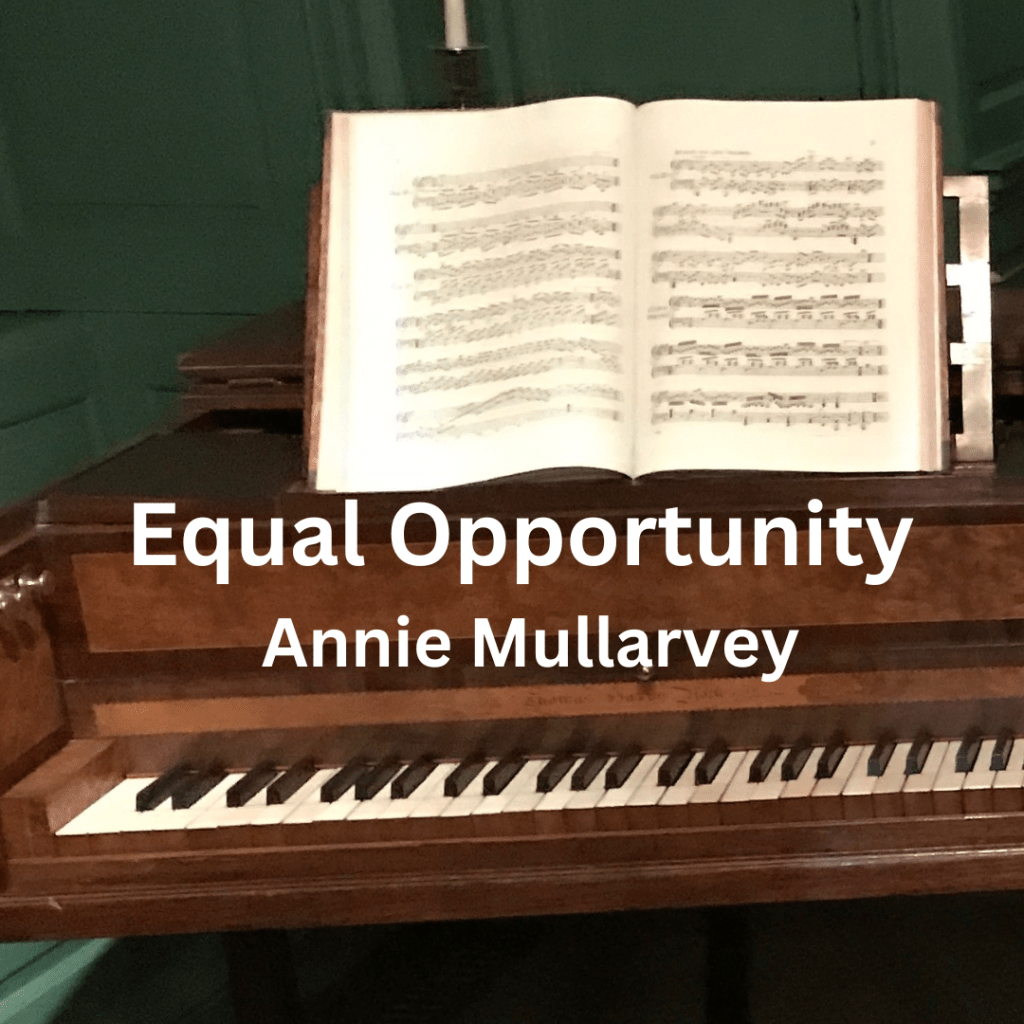
Richmond 1976. I was 18 and just out of home. Completing secondary school would have to wait. I was in a massive hurry to grow up in other ways, alongside my motley group of just out of home friends. My piano teacher, Gordon and his partner, Jeremy – yes, a gay couple; both upper crust and, well, from South Yarra, were keen to establish a piano restoration business. I willingly agreed to be their first employee – a trainee piano tuner on a government funded scheme. They hardly had to pay a cent for my wages and upkeep. Our first workshop was a well-lit shed in the backyard of a Bridge Road music store. This was a family-run business. Two brothers from a South American country, possibly Chile, often practiced classical guitar on the back porch. I was in raptures. They were good!
What an adventure. For me, it couldn’t have been a better arrangement. Young women like me were riding the crest of a feminist: ‘You can do it too’, equal opportunity from the Whitlam era wave. I took pride in wearing my blue Yakka overalls to work. I was living with a scruffy young man called Mick who fancied himself as a poet and musician. What a pair we made, with me going off to get dusty and grimy, polishing brass and stripping decayed ivory keys whilst Mick searched for creative inspiration on the dole. There were some morale boosting posters we often saw on walls in public places. Young females busily performing traditionally male jobs. A friend from high school, Helen, was in the apprentice cabinetmaker one. Another lass with short, cropped hair wearing overalls tinkered at plumbing. I can’t remember which other trades were depicted. Those were the days.
I loved the old-world atmosphere of the workshop. Our first piano’s, German manufacture from the 20’s or earlier, stood proud, ornate and upright, despite their gaping openings displaying well-worn hammers, colored leather strips and evenly segmented rows of metal strings. Once the inevitable repairs were done, the timber cases and brass work polished, Gordon and Jeremy called in for their final inspection. Jeremy would brandish a small leather case of tuning tools and begin the process of cranking up the old strings. The strains and creaks of resistance as he rotated the end pins echoed and vibrated menacingly. When an old piano hasn’t been tuned for ten years or more its strings certainly put up a mighty fight. I think I remember a few old rusty relics breaking with the strain. Ping!
Within a few months my bosses had moved up to a shopfront showroom in Burnley Street. In flooded the pianos in various stages of disrepair and neglect. A friendly, bearded chap called Bill moved them singlehandedly on the back of his open trailer. My boyfriend and I were offered upstairs for cheap rent. We took it willingly. We had been sharing the upstairs of another building in Westgarth Street, Fitzroy with a close friend. Things had been going okay there until we naively permitted a young man, Don, who we didn’t know very well, a room for just a few nightswhilst he sought somewhere permanent. Unfortunately, a few nights extended to a few weeks and by then Don’s histrionic opera student girlfriend (soprano of course) had also taken up residence. She had no qualms about helping herself to our meagre pantry either. Maybe she expected this as a show of gratitude on our parts for experiencing a talented artiste in our home…
I will never forget the day in January 1977, when some girlfriends, Kristin and Leigh turned up in a frightful state at the back door of the piano shop. They were renting a house only a few doors along from the two female victims of the Easy Street murders. I think we had only just heard of the macabre killings from the radio news ourselves. Poor Leigh and Kristen! I vaguely remember we wrapped them in blankets and watched them, white as sheets and visibly shaken, as they tried to make some sense of what had just occurred. Neither of them spent another night in their Easy Street rental. Their prospective families were understandably concerned and supportive and took them in for as long as they needed.
One day, my ambition to become a piano tuner after one year abruptly ceased. Gordon had informed me of a new approach to piano repairs the business was trialing. Customers could bring the action of their piano (the frame with hammers and dampers attached) and leave them at our workshop for later pick up. A man was expected to come that morning with his abovementioned mechanism, and I was required to get him to leave it with me for the day whilst I carried out necessary repairs. All I needed to do was polish up the tone of the middle register by briefly running a hot soldering iron over the front of each hammer, slightly hardening the felts. My boss had rushed off and left me to it.
The customer arrived. He was a friendly type who was on for a bit of a chat. Apparently, he was a professional art photographer. I thought that sounded enormously creative and cool. He asked me how long the repair job was likely to take. Without thinking twice, I replied that it would be two hours max. He seemed happy about the arrangement and sure enough he returned about three hours later and picked up his repaired equipment. Oops! Did I get into trouble. The boss was going to charge the photographer $100 for an entire day’s work. $100 was a substantial amount of money back then.
Indignant that I didn’t want to take part in ripping off people and given that I was being paid a lowly training wage myself, I resigned on the spot. What a principled eighteen-year-old! Continuing to live above the shop and overhearing my replacement downstairs, a man called Henry, working Mondays to Fridays became a cringeworthy complication. Mick and I soon moved out.
About Annie Mullarvey
Annie is in her mid-60s and cannot imagine living anywhere other than the Municipality of Merri-bek. She spent her childhood in Glenroy and now lives way up the other end in East Brunswick.
Over the years, she has worked as an inner urban community worker, a mental health social worker for Merri Community Health, and later for another local organization as counsellor/advocate for refugees and asylum seekers. She even married a teacher from Moreland High (now defunct), and they raised a family together in Brunswick.
She is passionate about social justice and human rights, and her short stories often reflect this. Annie has recently completed her first fiction novel, ‘No Fences for Joyce.’ The story follows Joyce O’Connor, a young woman rescuing her children and fleeing an abusive and alcoholic husband in Yarrawonga during the 1960s. They eventually settle in Broadmeadows where Joyce is hired by ‘Fenton’s Electronics’ (no relation to the Ericsson company), initially as a factory hand. There she meets her lifelong friends, Rosa from Italy and Maureen from Liverpool, England. Joyce and her companions are horrified by the frequency at which their female co-workers are developing repetitive strain type injuries due to the unrealistic work practices set by management. Joyce eventually becomes a shop steward with their union and helps to stage a successful lunchtime rally from the roof of the canteen. Later in the novel, Joyce reconnects with her old school friend, Suzi, and together they help to establish a women’s refuge in Yarrawonga.
Annie’s dream is to somehow convert this novel into a community play. To see it travel between Melbourne and Yarrawonga someday, helping to spread awareness about gender-fueled violence, is her idea of pretty darn special.
Copyright Annie Mullarvey, November 2024. All rights reserved; this intellectual property belongs solely to Annie Mullarvey.
 Stories Connecting Us
Leave a Comment